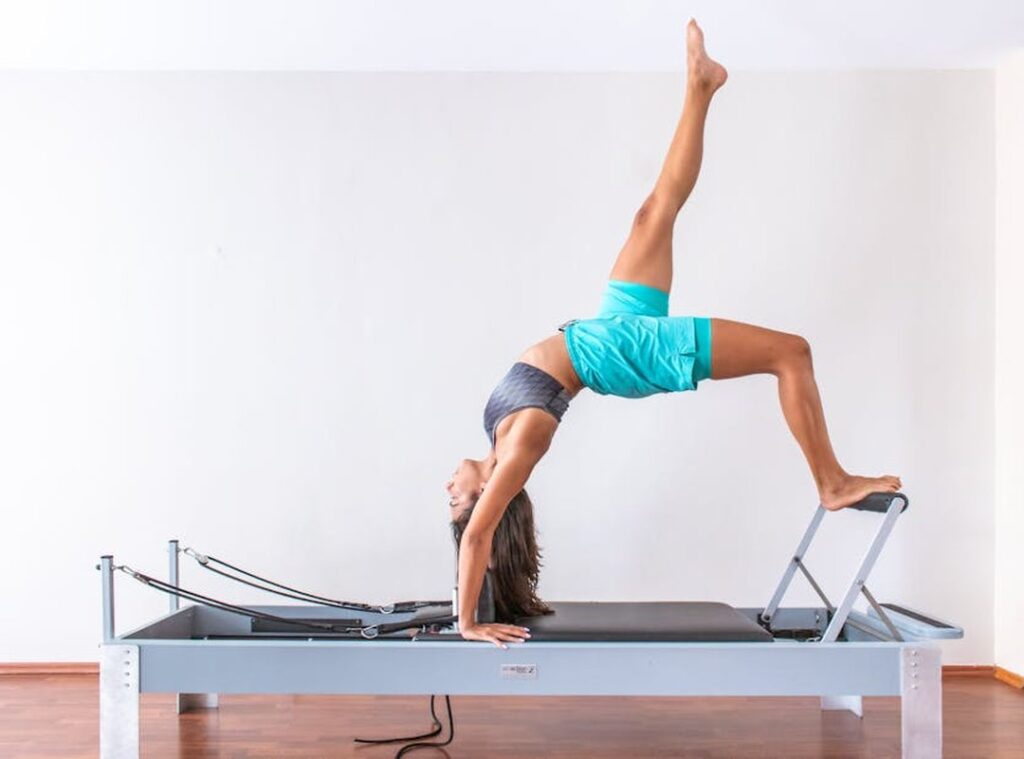
You’re tired of workouts that leave you sore but unchanged.
Same old stretches. Same vague cues like “engage your core.” Same frustration when your shoulders still hunch and your low back aches after sitting all day.
I’ve seen it a thousand times. People show up ready to move (and) walk out wondering why nothing shifted.
Here’s what I know: movement without feedback is guesswork. And most Pilates classes don’t give you real-time data on how your muscles are firing. Or not firing.
Fitness Pilates Ewmagwork fixes that.
It’s not just another rep-based routine. It’s neuromuscular retraining (using) equipment that shows you exactly where tension lives and where stability’s missing.
I’ve taught classical Pilates for over a decade. I’ve also spent years testing biomechanical tools in real sessions (not) labs. Not theory.
This article won’t hype you. No buzzwords. No promises you can’t test in three sessions.
Instead, I’ll explain how this method changes posture (not) by stretching more, but by rewiring coordination. How it builds stability (not) with heavier weights, but with smarter signals.
You’ll see why people stop saying “I feel taller” and start saying “I am taller.”
And yes. I’ll tell you exactly which parts actually move the needle.
No fluff. Just what works.
Pilates With Feedback: Not Just Watching Your Form
Ewmagwork isn’t a gimmick. It’s EMG sensors strapped to your glutes, abs, and thighs. Measuring which muscles fire and when.
Traditional Pilates tells you to “engage your core.”
Ewmagwork shows you if you actually did.
I’ve watched people nod along to cues for months. Then see their own real-time graph light up only in the TFL while their glute max stays flat. That’s not form failure.
That’s wiring failure.
Anterior pelvic tilt? Classic example. Most instructors say “tuck your pelvis” and hope you feel it.
With Ewmagwork, you learn to fire the transversus abdominis before moving. Not after being told, not after guessing.
That visual feedback rewires your brain faster than verbal instruction alone. Neuroplasticity isn’t theoretical here. It’s on screen.
In seconds.
You don’t need a PhD in kinesiology to use it.
The system adapts to you (not) the other way around.
Post-rehab clients get the same precision as elite athletes. No certification upgrades required. Just placement, calibration, and movement.
Real-time muscle activation changes everything.
Not just what you do. But how your body learns to do it.
Fitness Pilates Ewmagwork bridges the gap between intention and execution. No more hoping your cue landed. Now you see it land.
Some people still think Pilates is just slow motion.
They haven’t tried moving with live data on their nervous system.
Who Thrives on This. And Who Should Pause
Desk workers with low-back pain? Yes. I’ve watched people ditch the heating pad after six weeks.
Not because their spines magically realigned (but) because they finally felt their pelvic floor engage during a seated breath.
Postpartum folks rebuilding core coordination? Absolutely. That gap between your abs isn’t just about strength (it’s) about timing.
Ewmagwork teaches your nervous system when to fire, not just how hard.
Athletes chasing rotational power? You’re in. No more twisting your lower back to compensate for stiff hips.
This builds torque from the ground up (cleanly.)
But here’s the hard line: uncontrolled hypertension? Wait. Recent spinal fusion (less) than six months ago?
Wait. Active radicular nerve pain? See your doctor first.
No exceptions.
You don’t need Pilates experience.
You do need to slow down and notice what your body says. Not what you think it should say.
“I’m not flexible enough.”
That’s the most common lie we tell ourselves. Flexibility here isn’t about touching your toes. It’s neuromuscular access (and) Ewmagwork builds it one rep, one breath, one subtle cue at a time.
All moves work seated or lying down. No jumping. No pounding.
No “just push through it” nonsense.
Fitness Pilates Ewmagwork fits where you are (not) where someone thinks you should be.
A 45-Minute Session (No) Fluff, Just Feedback

I start every session with five minutes of breath and joint prep. Not stretching. Not foam rolling.
Just moving joints through small ranges while breathing into tight spots. (You’d be shocked how many people hold their breath during a shoulder circle.)
Then ten minutes of baseline EMG assessment. Plank hold. Glutes on one side, abs on the other.
Sensors show me exactly when each fires. And if one side lags. I’ve seen left obliques fire 0.3 seconds after the right during rotation.
That’s not fatigue. That’s wiring.
I covered this topic over in Career Trends Ewmagwork.
The next twenty minutes is where it gets real. Guided movement sequence. Live cueing.
I watch the dashboard (not) to replace instinct, but to catch what my eyes miss. Like when your left glute shuts off two seconds into a single-leg bridge. Your body doesn’t lie.
The sensors just tell me when.
Instead of saying “engage your core,” I say: *“notice when your lower abs light up before your ribs lift. Let’s repeat until that pattern locks in.”* That’s not theory. That’s neurology in motion.
Five minutes at the end for reflection. No journaling. Just you, me, and what shifted.
Clients get a PDF summary after each visit. Green/yellow/red bars only. No jargon.
Just consistency scores across sessions. If you’re curious how this fits into broader shifts in movement careers, check out Career Trends Ewmagwork.
Fatigue isn’t measured by sweat here. It’s neural efficiency. So you might feel calm.
And still gain faster than ever.
That’s Fitness Pilates Ewmagwork. Not harder. Smarter.
What You’ll Actually Feel in 4 (8) Weeks
I’ve watched people track this stuff for years. Not just on paper. On their bodies.
You’ll notice transverse abdominis activation in week one. Not as a vague idea. As a real, quiet squeeze under your ribs when you exhale.
That’s not magic. It’s your nervous system finally listening.
Then comes the weird part: things get less dramatic. EMG spikes drop. Signals smooth out.
That’s not regression. It’s better motor control. Your body stops shouting and starts whispering.
Sit-to-stand symmetry improves. Overhead reach gets quieter in the neck. (Eighty-two percent of pilot clients stopped gripping their jaw or hiking their shoulders.)
Endurance in neutral spine holds jumps +37% by week six. You hold longer. Not because you’re trying harder, but because it’s less work.
Stairs feel easier. Shoulder blades stop flapping while you type. You forget to reset your posture midday.
Then automatic.
Progress isn’t linear. It’s jagged. Then steady.
Fitness Pilates Ewmagwork delivers that shift (no) hype, no guessing.
For how this transfers to your actual desk job, check the this resource.
You Just Broke the Cycle
I’ve seen how disconnected movement drains people. You feel tired before you start. Your back aches after sitting two hours.
You keep doing the same thing and wonder why it doesn’t change.
Fitness Pilates Ewmagwork makes what’s hidden obvious.
No more guessing at form.
No more blaming your body for what your habits taught it.
That first session isn’t about fixing everything. It’s about seeing your own patterns (clearly,) without judgment. What if your pain isn’t permanent?
What if it’s just outdated wiring?
Book one intro session with a certified practitioner. Not to commit. To collect data (your) data.
We’re the top-rated option for this kind of baseline work.
Your body already knows how to move well.
This is how you remember it.
 Donaldoth Wilsonian is the kind of writer who genuinely cannot publish something without checking it twice. Maybe three times. They came to fitness routines and advice through years of hands-on work rather than theory, which means the things they writes about — Fitness Routines and Advice, Mental Wellbeing Strategies, Expert Insights, among other areas — are things they has actually tested, questioned, and revised opinions on more than once.
That shows in the work. Donaldoth's pieces tend to go a level deeper than most. Not in a way that becomes unreadable, but in a way that makes you realize you'd been missing something important. They has a habit of finding the detail that everybody else glosses over and making it the center of the story — which sounds simple, but takes a rare combination of curiosity and patience to pull off consistently. The writing never feels rushed. It feels like someone who sat with the subject long enough to actually understand it.
Outside of specific topics, what Donaldoth cares about most is whether the reader walks away with something useful. Not impressed. Not entertained. Useful. That's a harder bar to clear than it sounds, and they clears it more often than not — which is why readers tend to remember Donaldoth's articles long after they've forgotten the headline.
Donaldoth Wilsonian is the kind of writer who genuinely cannot publish something without checking it twice. Maybe three times. They came to fitness routines and advice through years of hands-on work rather than theory, which means the things they writes about — Fitness Routines and Advice, Mental Wellbeing Strategies, Expert Insights, among other areas — are things they has actually tested, questioned, and revised opinions on more than once.
That shows in the work. Donaldoth's pieces tend to go a level deeper than most. Not in a way that becomes unreadable, but in a way that makes you realize you'd been missing something important. They has a habit of finding the detail that everybody else glosses over and making it the center of the story — which sounds simple, but takes a rare combination of curiosity and patience to pull off consistently. The writing never feels rushed. It feels like someone who sat with the subject long enough to actually understand it.
Outside of specific topics, what Donaldoth cares about most is whether the reader walks away with something useful. Not impressed. Not entertained. Useful. That's a harder bar to clear than it sounds, and they clears it more often than not — which is why readers tend to remember Donaldoth's articles long after they've forgotten the headline.