
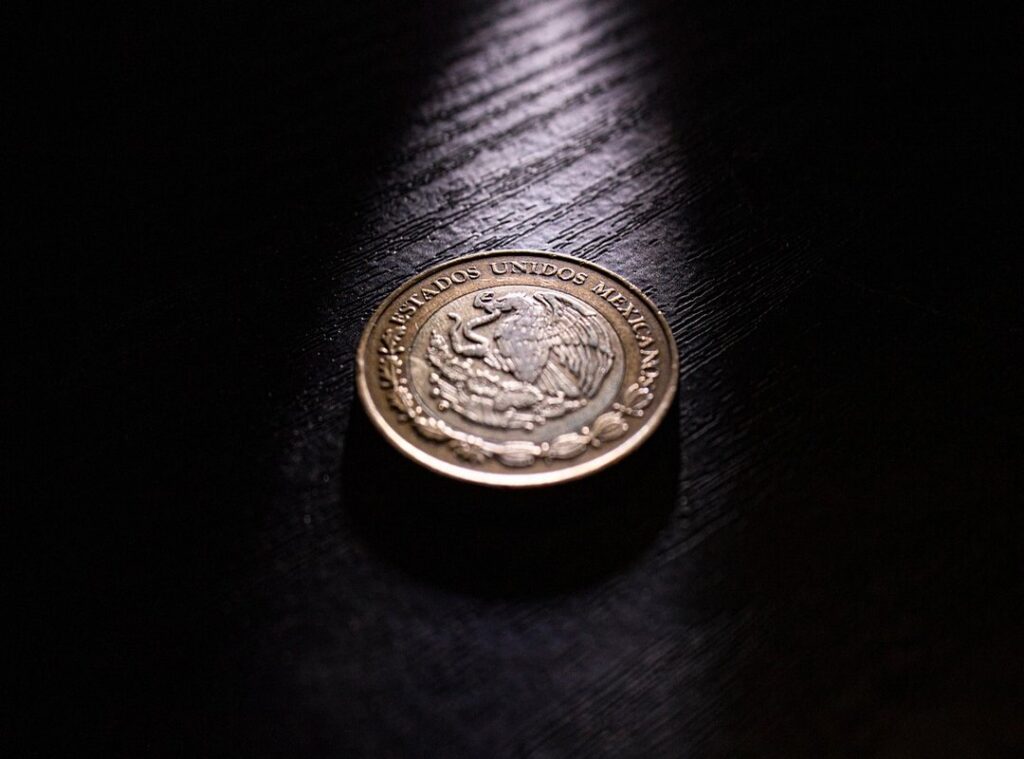
Right now, 1500 Mexican Pesos (MXN) is worth about 87,000 Chilean Pesos (CLP). This number changes daily, so it’s important to stay updated.
I know you’re probably wondering how to find the best rate anytime. That’s exactly what this guide is for. We’ll walk you through the steps to understand the MXN to CLP exchange rate.
You’ll also learn the best ways to convert your money and avoid those pesky hidden fees. By the end of this, you’ll be able to convert your 1500 pesos mexicanos a pesos chilenos with confidence.
Trust me, it’s simpler than you think, and let’s dive in.
Understanding the MXN to CLP Exchange Rate
Let’s start with the basics. An exchange rate is just the value of one currency in terms of another. For the Mexican Peso (MXN) and Chilean Peso (CLP), it tells you how many CLP you get for one MXN, or vice versa.
Several factors can make this rate go up and down. Economic health, inflation rates, and central bank policies in both Mexico and Chile play a big role. Global market sentiment also adds to the mix.
The mid-market rate is what you need to know. It’s the ‘real’ exchange rate without any fees. Banks and transfer services use this rate between themselves.
Here’s a quick rundown of key factors:
– Economic Health: Stronger economies tend to have stronger currencies.
– Inflation Rates: Higher inflation can devalue a currency.
– Central Bank Policies: Interest rates and monetary policies impact currency values.
– Global Market Sentiment: How investors feel about a country can affect its currency.
Over the last few months, the MXN/CLP rate has been quite volatile. A simple chart would show peaks and valleys, reflecting the interplay of these factors.
When you see the rate on Google, that’s the mid-market rate. The rate you’ll actually get from a service will be slightly different due to fees and markups.
So, what should you do, and first, always check the mid-market rate. This gives you a benchmark.
Next, compare rates from different services. Look for the one that offers the closest rate to the mid-market with the lowest fees.
If you’re looking to convert 1500 pesos mexicanos a pesos chilenos, make sure to use a reliable service. Don’t just go with the first option you find.
By staying informed and comparing rates, you can make the most of your money.
Step-by-Step: The Best Ways to Convert Your Pesos
Converting your pesos can be a hassle, but it doesn’t have to be. Let’s break down the best methods.
Method 1: Online Money Transfer Services
Online services like Wise and Remitly often offer the best rates and lowest fees for sending money abroad. Here’s how you do it:
– Create an account.
– Enter the amount you want to send.
– See the final received amount.
– Fund the transfer.
It’s that simple, and these platforms are user-friendly and transparent.
Method 2: Traditional Banks
You can also convert money through a bank transfer or at a physical branch. This is a secure option, but it’s often more expensive with higher fees and less favorable exchange rates.
Banks are reliable, but they might not give you the best deal. 1500 pesos mexicanos a pesos chilenos
Method 3: Currency Exchange Bureaus (‘Casas de Cambio’)
These are found in cities and airports. They’re convenient, especially if you need cash quickly. But beware, airport locations typically have the worst rates due to their convenience factor.
Always check the rates before you exchange, and it pays to shop around.
Method 4: Using a Debit/Credit Card Abroad
If you’re traveling, using a card with no foreign transaction fees can be a simple way to spend money in Chile. The bank handles the conversion automatically, often at a competitive rate.
Just make sure your card doesn’t charge extra for foreign transactions.
Comparison Table
| Method | Speed | Cost | Convenience |
|---|---|---|---|
| Online Money Transfer | Fast | Low | High |
| Traditional Banks | Slow | High | Moderate |
| Currency Exchange Bureaus | Instant | High | High |
| Debit/Credit Card | Instant | Moderate | High |
Recommendations
For the best balance of cost and convenience, I recommend using online money transfer services. They offer great rates and low fees.
If you need cash quickly, go for a currency exchange bureau, but avoid those in airports.
Using a debit/credit card with no foreign transaction fees is also a solid choice, especially for small, frequent transactions.
Remember, always compare rates and fees before making a decision. Converting 1500 pesos mexicanos a pesos chilenos can add up, so choose wisely.
How to Avoid Hidden Fees and Maximize Your Money

I once thought I was getting a great deal with a “no fee” transfer. Boy, was I wrong.
Hidden fees are everywhere, and they just hide behind different names. Zero commission or no fee transfers often come with a poor exchange rate.
That’s how they make their money.
Let me break it down. The spread or markup is the difference between the rate offered by a service and the current mid-market rate. You can find the mid-market rate on Google or Reuters.
Here’s a clear example: If the mid-market rate is 1 MXN = 55 CLP, but a service offers you 52 CLP, their markup is about 5.5%. For 1500 pesos mexicanos a pesos chilenos, that’s a hidden fee of over 4,000 CLP.
Always compare at least three services before converting. Check for both transfer fees and the exchange rate. Read reviews to check for any unexpected charges.
Trust me, it’s worth the extra effort.
Stay sharp out there.
Your Next Steps
When converting 1500 pesos mexicanos a pesos chilenos, it’s important to check the current exchange rate. This ensures you get the most accurate conversion. Exchange rates can fluctuate daily.
 Victoria Sladeyan is the kind of writer who genuinely cannot publish something without checking it twice. Maybe three times. They came to exercise tips and techniques through years of hands-on work rather than theory, which means the things they writes about — Exercise Tips and Techniques, Fitness Routines and Advice, Health and Wellness Updates, among other areas — are things they has actually tested, questioned, and revised opinions on more than once.
That shows in the work. Victoria's pieces tend to go a level deeper than most. Not in a way that becomes unreadable, but in a way that makes you realize you'd been missing something important. They has a habit of finding the detail that everybody else glosses over and making it the center of the story — which sounds simple, but takes a rare combination of curiosity and patience to pull off consistently. The writing never feels rushed. It feels like someone who sat with the subject long enough to actually understand it.
Outside of specific topics, what Victoria cares about most is whether the reader walks away with something useful. Not impressed. Not entertained. Useful. That's a harder bar to clear than it sounds, and they clears it more often than not — which is why readers tend to remember Victoria's articles long after they've forgotten the headline.
Victoria Sladeyan is the kind of writer who genuinely cannot publish something without checking it twice. Maybe three times. They came to exercise tips and techniques through years of hands-on work rather than theory, which means the things they writes about — Exercise Tips and Techniques, Fitness Routines and Advice, Health and Wellness Updates, among other areas — are things they has actually tested, questioned, and revised opinions on more than once.
That shows in the work. Victoria's pieces tend to go a level deeper than most. Not in a way that becomes unreadable, but in a way that makes you realize you'd been missing something important. They has a habit of finding the detail that everybody else glosses over and making it the center of the story — which sounds simple, but takes a rare combination of curiosity and patience to pull off consistently. The writing never feels rushed. It feels like someone who sat with the subject long enough to actually understand it.
Outside of specific topics, what Victoria cares about most is whether the reader walks away with something useful. Not impressed. Not entertained. Useful. That's a harder bar to clear than it sounds, and they clears it more often than not — which is why readers tend to remember Victoria's articles long after they've forgotten the headline.