
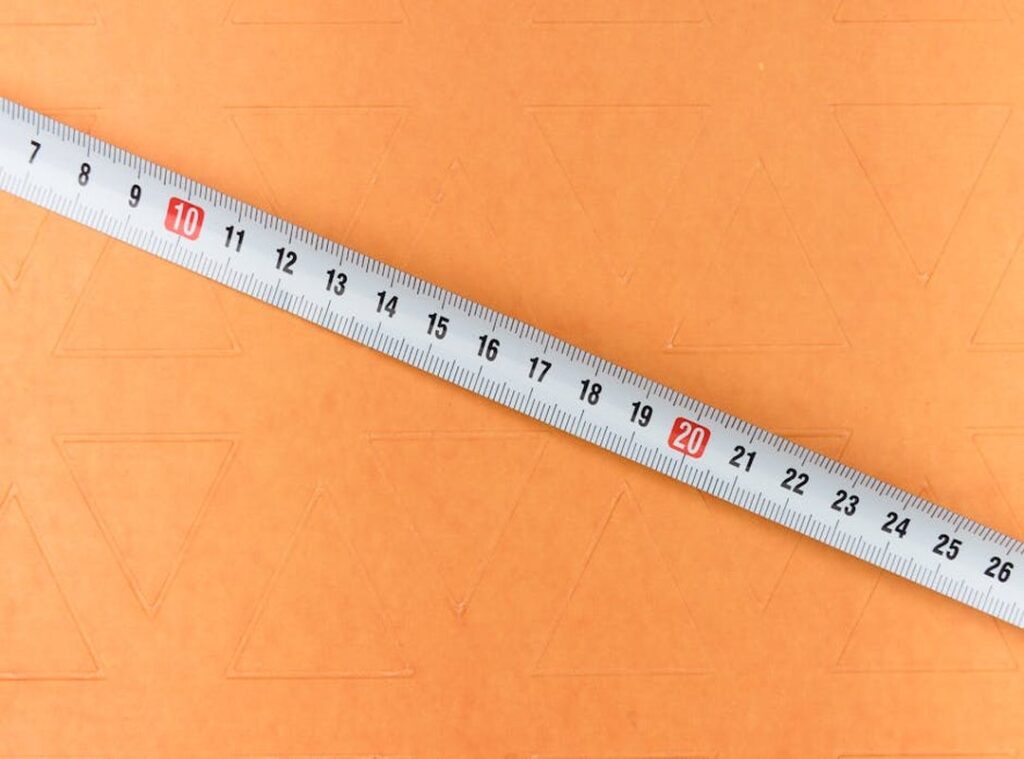
Converting 5.10 feet to cm can be a bit tricky, especially if you’re not used to switching between imperial and metric systems. I get it, it’s frustrating. But don’t worry, I’m here to make it simple.
Let’s face it, we’ve all been there, staring at a conversion chart, feeling lost. Why do we even have two different systems anyway? It’s confusing.
This article will help you convert 5.10 feet to cm and understand the process. No more guessing or relying on unreliable online tools.
I’ll break it down step by step, so you can follow along easily. Trust me, by the end of this, you’ll be a pro at these conversions.
So, are you ready to get started, and let’s dive in.
Understanding the Units: Feet and Centimeters
Feet: A foot is a unit of length in the imperial system. It’s commonly used in the United States for measuring height, distance, and even the size of your TV.
Centimeters: A centimeter, on the other hand, is a metric unit. It’s widely used around the world, especially in scientific and medical contexts. Think about it as the go-to for measuring smaller lengths, like the width of your smartphone.
Conversion Basics: The basic relationship between feet and centimeters is pretty straightforward. 1 foot equals 30.48 cm. Simple, right?
| Feet | Centimeters |
|---|---|
| 1 | 30.48 |
So, if you ever need to convert 5.10 feet in cm, just multiply by 30.48. Easy peasy.
Knowing these conversions can save you a lot of confusion, especially when you’re dealing with international measurements. Trust me, it’s better than trying to guess and ending up with a couch that doesn’t fit through your door.
Step-by-Step Conversion: 5.10 Feet to Centimeters
Let’s break it down.
Step 1: Write down the given measurement (5.10 feet).
Step 2: Use the conversion factor (1 foot = 30.48 cm).
Step 3: Multiply 5.10 by 30.48 to get the result in centimeters.
Step 4: Perform the calculation (5.10 * 30.48 = 155.448 cm).
Step 5: Round the result if necessary (e.g., 155.45 cm).
It’s that simple.
You might be wondering, why 30.48 cm, and that number comes from international standards. It’s a well-established and widely accepted conversion rate.
So, 5.10 feet in cm is 155.45 cm.
Knowing these conversions can be incredibly useful, especially when dealing with measurements in different systems. Whether you’re working on a DIY project or just curious, having this knowledge can save you a lot of time and confusion.
Practical Examples and Applications
Let’s dive into some real-world examples where converting feet to centimeters can be super useful.
First up, international travel. If you’re applying for a visa or filling out travel documents, you might need your height in metric units. For instance, if you’re 5.10 feet tall, that converts to 170.7 cm.
Simple, right?
Now, let’s talk about gardening. When you’re planning a garden bed, precision is key. If the dimensions are given in feet, converting them to centimeters can help you get those measurements just right.
Say your garden bed is 6 feet long; that’s 182.88 cm. This way, you can ensure your plants have the perfect space to grow.
Moving on to home improvement. When you’re measuring a room for furniture, accuracy is crucial. A room that’s 12 feet long converts to 365.76 cm.
This helps you figure out if that new couch will fit perfectly or if you need to rethink your layout.
By the way, these conversions aren’t just handy for everyday tasks. They can also be relevant in more serious contexts, like understanding global health strategies. (For example, how changes in measurement standards can impact medical practices.) If you’re interested, check out how global health strategies are evolving.
Common Mistakes and How to Avoid Them
Mistake 1: Using the wrong conversion factor. For example, some people use 1 foot = 30 cm instead of the correct 30.48 cm.
Mistake 2: Not rounding correctly or using too many decimal places. This can lead to significant errors in calculations.
Mistake 3: Confusing feet with inches. A common error is writing 5.10 inches instead of 5.10 feet.
These mistakes might seem minor, but they can add up. Let’s take a real-world example. If you’re converting 5.10 feet to cm, using the wrong factor (30 cm) would give you 153 cm.
But using the correct factor (30.48 cm) gives you 155.448 cm. That’s a difference of over 2 cm!
Avoid these pitfalls by double-checking your conversions and rounding appropriately. It’s a simple step that can save you a lot of trouble.
Tools and Resources for Easy Conversion
When you need to convert units quickly, having the right tools can make all the difference. Online conversion tools are a great place to start. They’re fast, accurate, and can handle a wide range of conversions.
For example, if you need to convert 5.10 feet in cm, an online tool will give you the answer in seconds. No more guessing or manual calculations.
But what if you’re on the go, and mobile apps come in handy. There are several reliable apps that can do the job.
Just type in your values, and you get the result instantly.
Sometimes, you might not have access to a tool or app. That’s when manual calculation tips become useful. Knowing basic conversion factors can save you in a pinch.
For instance, 1 foot equals 30.48 cm. So, 5.10 feet in cm is 5.10 * 30.48.
Simple, right? These methods can help you stay on top of your conversions, whether you’re at home, in the office, or out and about.
Mastering Unit Conversions
Understanding how to convert units is a fundamental skill in many fields. 5.10 feet in cm equals 155.45 cm. This conversion involves using the correct conversion factor, which in this case is 1 foot = 30.48 cm. Accurate tools and resources, like conversion calculators or charts, can make this process easier and more reliable.
Practicing these conversions regularly will help you become more adept at quickly and accurately converting between different units of measurement.
 Donaldoth Wilsonian is the kind of writer who genuinely cannot publish something without checking it twice. Maybe three times. They came to fitness routines and advice through years of hands-on work rather than theory, which means the things they writes about — Fitness Routines and Advice, Mental Wellbeing Strategies, Expert Insights, among other areas — are things they has actually tested, questioned, and revised opinions on more than once.
That shows in the work. Donaldoth's pieces tend to go a level deeper than most. Not in a way that becomes unreadable, but in a way that makes you realize you'd been missing something important. They has a habit of finding the detail that everybody else glosses over and making it the center of the story — which sounds simple, but takes a rare combination of curiosity and patience to pull off consistently. The writing never feels rushed. It feels like someone who sat with the subject long enough to actually understand it.
Outside of specific topics, what Donaldoth cares about most is whether the reader walks away with something useful. Not impressed. Not entertained. Useful. That's a harder bar to clear than it sounds, and they clears it more often than not — which is why readers tend to remember Donaldoth's articles long after they've forgotten the headline.
Donaldoth Wilsonian is the kind of writer who genuinely cannot publish something without checking it twice. Maybe three times. They came to fitness routines and advice through years of hands-on work rather than theory, which means the things they writes about — Fitness Routines and Advice, Mental Wellbeing Strategies, Expert Insights, among other areas — are things they has actually tested, questioned, and revised opinions on more than once.
That shows in the work. Donaldoth's pieces tend to go a level deeper than most. Not in a way that becomes unreadable, but in a way that makes you realize you'd been missing something important. They has a habit of finding the detail that everybody else glosses over and making it the center of the story — which sounds simple, but takes a rare combination of curiosity and patience to pull off consistently. The writing never feels rushed. It feels like someone who sat with the subject long enough to actually understand it.
Outside of specific topics, what Donaldoth cares about most is whether the reader walks away with something useful. Not impressed. Not entertained. Useful. That's a harder bar to clear than it sounds, and they clears it more often than not — which is why readers tend to remember Donaldoth's articles long after they've forgotten the headline.